

If Trump got elected, the last thing Americans need worry about is Muslims.
Kind: Articles
traditional long form content: a post with an explicit title and body
Great. Off we go to bomb an already ruined country. #SaveSyria
Great. Off we go to bomb an already ruined country. #SaveSyria
Work this week has gone nova. Exploding, then collapsing in a big heap!
Work this week has gone nova. Exploding, then collapsing in a big heap!
The Connection was Reset, in #WordPress. Getting a little tired of this. #firefox #iceweasel

It seems that on updating certain aspects of my WordPress sites, I get this
message. Iceweasel/Firefox only.

Facebook experts: how do I stop all re-shared posts appearing in my feed?
I’d like to stop all re-shared posts appearing in my Facebook feed, and only
see newly created content from my contacts. Is this possible?
Self-hosting the IndieWeb

Discovering the IndieWeb movement was a 2015 highlight for me. It addressed many of my concerns about the direction of the modern internet, especially regarding ownership and control over that data. But to truly own your own data, self-hosting is a must!
Background: Self-hosting your own stuff
I’m an ideas person. I have a number of projects – or, rather, project ideas – lined up, which I need to record and review. My blog provides me with the ideal space for that, as some ideas may attract the attention of others who are also interested. But why does this matter?
As someone who naturally likes to share experiences and knowledge, I see no benefit in not sharing my ideas too. After all, the web is all about sharing ideas. This matters to me, because the web is widely regarded as the most valuable asset civilised society has today (aside from the usual – like natural resources, power, warmth and sustenance)!
Owning your own data
As a small business owner, I sometimes benefit from various common business practices. For example, the standard accounting principle of straight-line depreciation means that after several years, capital assets once purchased by the business have little-to-no use for the business, meaning they become potential liabilities (both in the financial and risk-management sense). This means I am able to get hold of used, good-condition computing hardware of 4-5 years old at very little cost.

This is useful for me, as a blogger and an IndieWeb advocate, as I can not only publish and manage all my own data, but also physically host my own data too. As I have fibre broadband running to my house, it’s now feasible to serve my blog as reasonable speeds with 10-20 Mib/sec upstream (“download speed” to you), which is sufficient for my likely traffic and audience.
This ties in nicely with one of my core beliefs, that people should be able to manage all their own data if they choose. I am technically competent enough, and have the meants at my disposal to do it. So why not!
Another driver towards this is that I wish to permanently separate “work” and “pleasure”. My business web hosting and cloud service is for my customers. Yes, we host our own web content as a business, but personal content? Well, in the interests of security and vested interests, I am pushing towards making personal content something that is only hosted for a paying customer.
Of course, I would encourage anyone to start their own adventure self-hosting too!
Many bridges to cross
Naturally, taking on this type of arrangement has various challenges attached. Here is a selection of the tasks still to be achieved:
- Convert some space in house for hosting
- Create a level screed
- Sort out wiring
- Fire detection/resistance considerations
- Power supply (e.g. UPS)
- Physical security
- Get server cabinet & rack it up
- Configure firewall(s)/routing accordingly
- Implement back-up – and possibly failover – processes
Step one: documentation
Whilst I am progressing these endeavours, it would be remiss if I didn’t document them. There is a lot to be said for the benefits (to a devop, anyway) of hosting one’s own sites and data, but naturally my blog must carry on while I am in the process of building its new home.
A quick jiggle around of my site’s menu structure will hopefully clarify where you can see this work, going forwards (hint, check the projects menu).
Taking it from here
If you are interested in hosting your own servers and being in direct control over your content/data, why not subscribe to this blog’s RSS feed or subscribe by email (form towards footer). Or if you have comments, just “Leave a Reply” beneath! 🙂
My Current Indieweb Setup | Acegiak
Source: My Current Indieweb Setup | Acegiak
Nice blog Ashton, thanks for sharing & making the plugin! Now that Blogrolls aren’t part of core WordPress, what do you use to manage your Blogroll links? I’m looking at Link Library, but not sure if compatible…
A taste of #MozFest

MozFest
Let’s be clear from the outset: there’s no word that adequately defines MozFest. The Mozilla Festival is, simply, crazy. Perhaps it’s more kindly described as chaotic? Possibly. A loosely-coupled set of talks, discussion groups, workshops and hackathons, roughly organised into allocated floors, feed the strangely-complimenting hemispheres of work and relaxation.
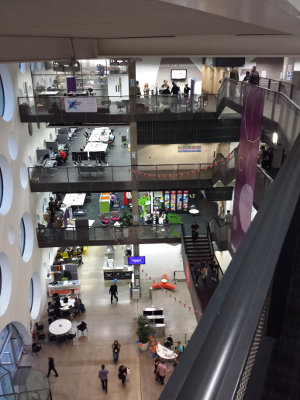
How MozFest works
Starting from the seeming calm of Ravensbourne’s smart entrance, you stroll in, unaware of the soon-experienced confusion. A bewildering and befuddling set of expectations and realisations come and go in rapid succession. From the very first thought – “ok, I’m signed in – what now?”, to the second – “perhaps I need to go upstairs?”, third – “or do I? there’s no obvious signage, just a load of small notices”…. and so on, descending quickly but briefly into self-doubt before emerging victorious from the uneasy, childlike dependency you have on others’ goodwill.
Volunteers in #MozHelp t-shirts, I’m looking at you. Thanks.
The opening evening started this year with the Science Fair, which featured – in my experience – a set of exciting hardware and software projects which were all in some way web-enabled, or web-connected, or web-controlled. Think Internet of Things, but built by enthusiasts, tinkerers and hackers – the way it should be.
“Open Hardware” projects, interactive story-telling, video games and robots being controlled by the orientation of the smartphone (by virtue of its gyroscopic capability).. the demonstration of genius and creativity is not even limited by the hardware available. If it didn’t already exist, it got designed and built.
An Open Web, for Free Society
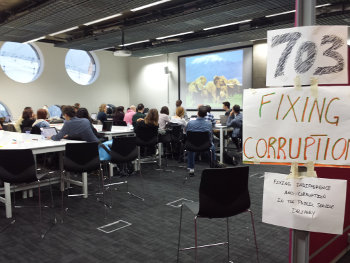
As made clear from the opening keynotes on Saturday morning, MozFest is not a place for debate. Don’t think this as a bad thing. The intention is simply to help communicate ideas, as opposed to getting bogged down in the mire of detail. “Free” vs “Open”? Not here. The advice given was to use one’s ears much more than one’s mouth, and it’s sound advice – no pun intended. I have generally been considered a good listener, so I felt at home not having to “prove” anything by making a point. There was no point. 😉
Several themes were introduced in the keynote speeches which really resonated with the attendees – sorry, the participants of MozFest. That of online security and surveillance, more than two years after Edward Snowden’s revelations, was as prominent as ever. Participation was another key theme, and to me one of the most poignant ideas of the whole weekend. Participation was not encouraged or expected; it was simply threaded into the very fabric of one’s presence. You participated, to a lesser of greater degree. This was one of the most socially inclusive experiences I have ever known.
Stories by the Fireside
I cannot overstate how social inclusion at all levels permeated MozFest. From the smallest of teams – 2 individuals, to the largest groups I saw, people were constantly engaged in conversation, development – personal, social and technical, and – perhaps surprisingly – quiet reflection, too.
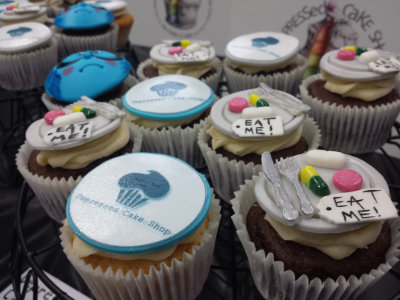
Quiet zones were available for those needing a little downtime. The cerebral intensity of the weekend is clearly felt.
The concept of the fire-side story appeared several times, reminding us that the web isn’t just a resource in and of itself, but rather a medium to convey information. Storytelling, one of the oldest methods of such conveyance, was a prescient theme. Represented through journalism, community and leadership, the scale of recognition (and a reminder) that the web is, primarily, a means to convey stories, took me somewhat aback. It’s inescpable logic, almost lost amidst the omnipresent noise of today’s social media.
Looking to the Future
Not only was MozFest a means to appreciate, understand and build upon the means to share information, it was also firmly invested in its future. Science and education were extremely well represented by group talks, workshops and forums.
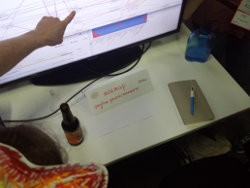
In fact, the sheer number of topics on offer, and guaranteed clashing of events sure to interest you, simply went to prove one thing: the web is not just big, it’s bigger than you can imagine. How the event planners and coordinators of MozFest actually found a way to combine the multitude of themes and interests into “Spaces” and “Pathways” is a huge credit to the thought-leadership behind this event. By encouraging leadership, the Mozilla Foundaiton has shown itself to be a more-than-capable leader in as diverse a field as there can be.
What I learned at MozFest
On arrival, I didn’t know what to expect. First-timers don’t. I had a vague incling that I would face a learning curve, adapting to the culture and activities of the event. Like a wandering spirit, I probably stared starry-eyed at the overwhelming number of quickly-scribbled “adverts”, pinned, taped and hung up everywhere, telling me about “this event” or “that workshop”. Even now, in reflection, I feel that the above post barely scratches the surface of the experience.
It’s sensory-overload, pure and simple. 🙂
MozFest is a journey. Physically, many people made long journeys to attend and participate. To those people, I am grateful – you have made my life richer by your efforts. But psychologically, emotionally and intellectually MozFest is so much more than the sum of its multitudinous parts: It’s an idea, a belief that together we can build something better for much time to come; build something to last that has intrinsic “goodness”. And we are not actually talking about the web. The conversation has evolved. The web might be the medium, but the story is now about us.
The question is, how do we nurture our most sublime nature, and be all we can?
How to configure org2blog for multiple WordPress blogs.
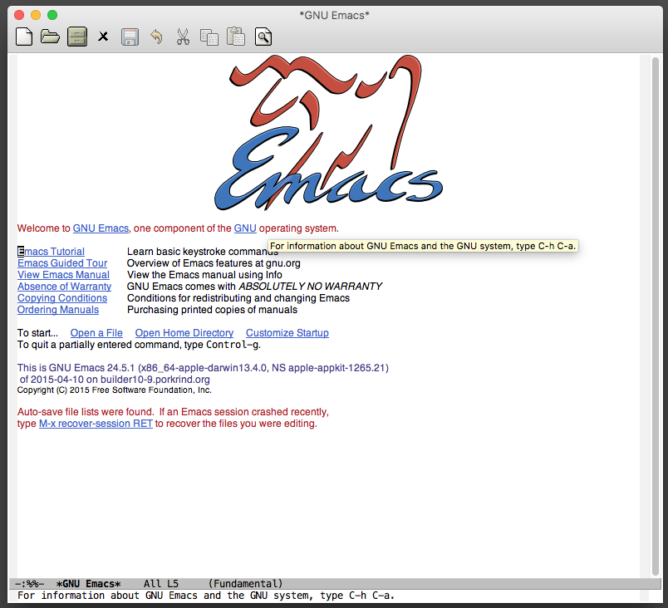
The instructions provide clues, but don’t spell out, how to set up org2blog for multiple blogs. https://github.com/punchagan/org2blog
(setq org2blog/wp-blog-alist
  '(("wordpress" :url "http://username.wordpress.com/xmlrpc.php"
     :username "username"
     :default-title "Hello World"
     :default-categories ("org2blog" "emacs")
     :tags-as-categories nil)
    ("my-blog" :url "http://username.server.com/xmlrpc.php"
     :username "admin")))
But what if you don’t want to specify your username and password in this multi-site set-up?
The answer lies in expanding on the elisp provided.
(let

 (creds-stevedowe creds-warpuni creds-status)
 (add-to-list 'auth-sources "~/.netrc")

 (setq creds-stevedowe (auth-source-user-and-password "stevedowe.me"))
 (setq creds-warpuni (auth-source-user-and-password "warpuni.com"))
 (setq creds-status (auth-source-user-and-password "status.warphost.net"))

 (setq org2blog/wp-blog-alist
  `( ("stevedowe.me"
      :url "https://dowe.uk/xmlrpc.php"
      :default-categories ("me" "process" "things" "world")
      :tags-as-categories nil
      :username ,(car creds-stevedowe)
      :password ,(cadr creds-stevedowe))

     ("warpuni.com"
      :url "https://warpuni.com/xmlrpc.php"
      :default-categories ("Analytics","BioData","FreeSoftware","Internet","Mobile","News","Productivity","Security","Social" "Support")
      :tags-as-categories nil
      :username ,(car creds-warpuni)
      :password ,(cadr creds-warpuni))

     ("status.warphost.net"
      :url "https://status.warphost.net/xmlrpc.php"
      :tags-as-categories nil
      :username ,(car creds-status)
      :password ,(cadr creds-status)))))
[ This is a legacy post. Some details may no longer be relevant to modern software implementations. ]
Jekyll and WordPress: how I learned to stop worrying
I had been cultivating a fascination with Jekyll for blogging for a short while. It looked oh so clean, and minimalist, and sleek. It has its fans, for sure, and I am one of them.
If I were starting my blog from this day, I would almost certainly consider using Jekyll for it, rather than WordPress.
WordPress: better the devil?
But, I am not. Back in 2007 (can it really be so long ago?!), when I started blogging, I didn’t give much thought to my requirements eight years down the line. And the funny thing is, they have hardly changed.
Org2Blog is everything I need from blogging. It’s quick, because I can compose my text in Emacs, and also supply my category and tag information directly too.
When saving the post in Emacs, I can save a local copy using the same date-title-based file name schema that Jekyll would expect (e.g.: 2015-10-28-Assessing_Jekyll_as_an_alternative_blogging_platform.org).
Further benefits to Emacs/WordPress duality
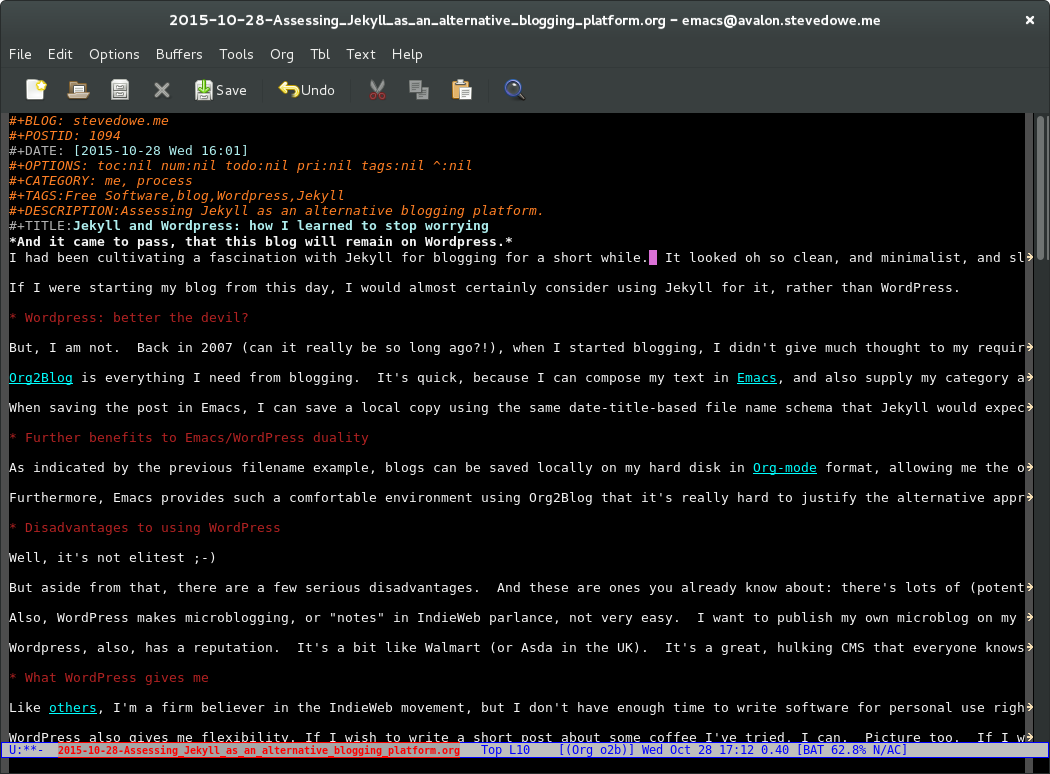
As indicated by the previous filename example, blogs can be saved locally on my hard disk in Org-mode format, allowing me the option later on to convert everything for a Jekyll-based future. In other words, making the decision to hard-switch from one system or another need not be rushed and can, in fact, be assessed based on technical need.
Another “turn-off” from Jekyll is that, despite various attempts to make it easy to migrate WordPress posts, I found the process awkward and the documentation confusing. There is more than one way to skin this cat.
For me, Emacs provides such a comfortable environment using Org2Blog that it’s really hard to justify the alternative approaches of org-jekyll or Org+Jekyll.
Disadvantages to using WordPress
Well, it’s not elitest 😉
But aside from that, there are a few serious disadvantages. And these are ones you already know about: there’s lots of (potentially-vulnerable) PHP running, which is a security risk and also makes WordPress … slow.
Also, WordPress makes microblogging, or “notes” in IndieWeb parlance, not very easy. I want to publish my own microblog on my site and publish it elsewhere, but this will take futher investigation.
WordPress, also, has a reputation. It’s a bit like Walmart (or Asda in the UK). It’s a great, hulking CMS that everyone knows. It’s everywhere. Everyone uses it. Which means there’s less that’s “special” about it. And that’s a shame, because for all of that it’s really quite brilliant.
What WordPress gives me
Like others, I’m a firm believer in the IndieWeb movement, but I don’t have enough time to write software for personal use right now. Luckily, many talented and dedicated individuals have stepped up and kindly donated their time and code to enable the IndieWeb on WordPress sites. This suits me down to the ground. At least I can support the movement by advocating and using their code.
WordPress also gives me flexibility. If I wish to write a short post about some coffee I’ve tried, I can. Picture too. If I wish to incorporate a video or music in a page fo rsome reason, the built-in editor makes that effortless. As it does, embedding a tweet too. WordPress is doing favours for the web at large, by keeping our writing options open and encouraging open sharing, rather than feeding us silo-centric drivel-data that we see so often from certain social networks!
One last thing WordPress gives is the ability for people who are not computer-confident to use a device like a Chromebook, or even their phone, and still provide a compelling and easy-to-use platform for sharing content.