http://arstechnica.co.uk/gaming/2016/07/nintendo-playstation-hands-on/
The internet’s been alive with this story for a few days, so I’m late to the party. But it finally reveals what we suspected existed for so long.


http://arstechnica.co.uk/gaming/2016/07/nintendo-playstation-hands-on/
The internet’s been alive with this story for a few days, so I’m late to the party. But it finally reveals what we suspected existed for so long.
http://www.huffingtonpost.co.uk/claire-patelcampbell/star-trek-women_b_11175978.html
A fair analysis of what seems to be missing in modern Trek.
#startrek
"Your Skype calls are about to get much better" is an underwhelming title for what is otherwise exceptionally gushing praise for Redmond. Like, PR-aise.
Will Google respond … with another new messaging app release? 😉
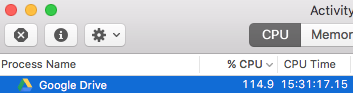
Absolutely nothing. Say it again! Nothing apart from pegging the CPU on #macOS, anyway. Gotta love #GoogleDrive !
Hey, Drive, what are you good for? Absolutely nothing. Say it again! Nothing apart from pegging the CPU on #macOS , anyway. Gotta love #GoogleDrive !
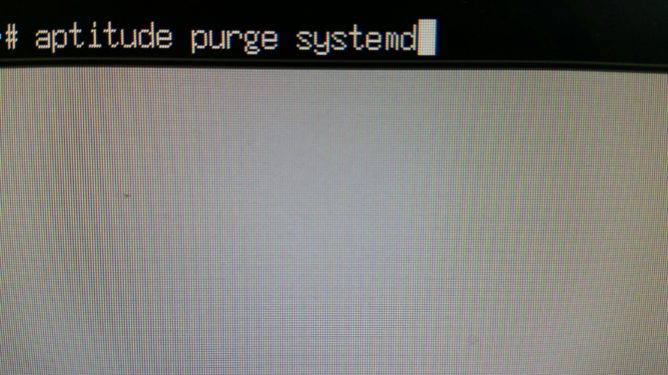
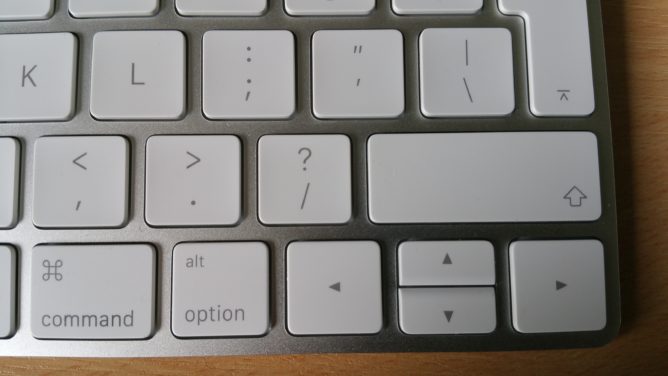
This is a confession of a new Mac user, seeking absolution.
I have a Mac. It’s for work. Unfortunately, I finally came to realise that I cannot reasonably develop web apps to work on iOS and macOS without having access to those platforms for testing. I feel I’ve done exceptionally well to avoid this reality for many years and plough on with the Linux desktop, but building a VM Hackintosh without a proper software license is against my morals and, indeed, the law.
Would I have bought a Mac for personal use? Of course not. There’s no need; I have been a (more-or-less) happy GNU/Linux user for 15+ years. The Linux desktop has provided me with everything I need from a computer, and I’ve enjoyed the reliability of open source software. And I will continue to be a GNU/Linux user.
But … one thing about Linux that is, occasionally, frustrating is the complexity of software. I don’t mean that its typical user software is difficult or overwhelming in Linux. Instead, it’s that there is never the ‘best’ way to do things in Linux; there are multiple, ‘reasonable’ ways. It’s this lack of ‘purity’ about the desktop experience which sometimes confounds newbies, and turns some people off.

From my admittedly limited experience, it seems that people prefer to learn one way to do things and to stick to that way. With all the desktop environment options in Linux, there is no ‘one way’. This is why each platform has its advocates and evangelists, whether it’s Windows, macOS or GNU/Linux.
I feel like I have been spoilt with GNU/Linux, and especially with GNOME 3. To me, there is no better desktop environment than GNOME 3, despite having moments of hair-pulling frustration at it, from time to time. But GNOME 3 is a beautiful desktop: it’s clean and minimalist, its default file system application, Nautilus is more functional than the Mac’s Finder, its handling of multiple workspaces (where Linux is constantly superior) and navigation across those workspaces is much more fluid and natural, and so on.
There are political, social and technical issues with GNOME development and the whole GNU/Linux system at large (let’s not mention systemd here), but if you were to ignore those factors and introduce somebody to ‘the Linux desktop’, I would argue that GNOME 3 (and Cinnamon too, for that matter) present a beautiful interface to enjoy and work in. It’s not perfect, and can be problematic too at times, but it’s flexible and open.
That was a very long-winded introduction, but I felt it necessary to establish my position, before I talk about the Mac.

The problem I have is this: I want to love the Mac, but I don’t. Sometimes, especially in business, you feel you need a commercial product simply because it helps you fit into the world around you. And, when a computer costs you a significant amount of hard-earned cash, it’s got to be something you want. Sadly, I didn’t want this. It was simply a necessity for me to continue doing what I do to earn a living. Therefore, it felt ‘forced’ rather than chosen, or desired.
When you identify with a philosophy, such as I have with the guiding principles of free/libre open source software, you develop a mindset. You become attached to the tools and methodology deriving from that philosophy. It becomes incredibly frustrating when things that were easy on Linux become hard on anything else. You wonder why people put up with all these obstructions to productivity…
Let’s look at a few of these. As a software developer, sysadmin, business person and general user (who is used to the layout of a standard UK PC keyboard), I ran into several problems switching over to a Mac:


https://www.youtube.com/watch?v=bRHAio98n-g
So, the question remains, is there enough goodness left in macOS to entice me to migrate over for good?
Are you kidding?!
Less productivity, less freedom, some bizarre defaults, some frustrating impediments to productivity and all backed by a ‘can do no wrong’ philosophy mean that Apple’s products will stay strictly off my shopping list commercially and personally for the foreseeable future.
I won’t be selling my ThinkPad T420. No way, José! But at least I can now do iOS and macOS testing for web apps and site layouts. In that vein, Apple makes great test machines!
And I think I have absolved myself 🙂
<img class="alignnone" src="https://lh3.googleusercontent.com/-y7euoFK5BKc/V3E9FOqOjII/AAAAAAAKMxU/lQnvaLPYRc4WzxN42T6U2yID3fotBIzPg/s0/Screen%2BShot%2B2016-06-27%2Bat%2B15.49.08.png" alt="" />
Making the most of the thunderbolt display, then… lol
On this historic day of the #brexit result, my thoughts are with Britain’s MEPs who have worked tirelessly in our country’s interest within Europe, and who must now feel like the vote is a kick in the teeth.
